
Hip Strengthening Exercises: Expert Guide for Pain-Free Movement
Simple Movements That Transform Weak Hips Into Strong Foundations
Do your hips feel unstable when walking? Does climbing stairs leave you feeling wobbly or in pain? Weak hip muscles affect millions of people, leading to poor balance, chronic pain, and increased injury risk.
This expert guide reveals the most effective hip strengthening exercises to build stability, reduce pain, and improve mobility. Whether you’re recovering from injury, managing arthritis, or preventing future problems, you’ll discover evidence-based techniques from Hip Health Professionals that deliver real results.
Why Hip Strength Matters
Strong hips are essential for nearly every movement you make. When hip muscles are weak, your entire body compensates, leading to problems far beyond the hip joint itself.
The strength connection: Weak hips force other muscles and joints to work harder, creating a cascade of pain and dysfunction throughout your body.
Muscle Function
Hip strengthening exercises target:
- Gluteus maximus – Primary hip extensor for walking and stairs
- Gluteus medius – Stabilizes pelvis during single-leg stance
- Hip flexors – Lift leg and control hip movement
- Hip abductors – Prevent hip drop during walking
- Hip adductors – Stabilize and control leg position
Research from Hospital for Special Surgery confirms that targeted strengthening significantly reduces hip pain and improves function.
“The hips are prone to continually getting tighter and weaker unless we stretch and strengthen. By doing mobility and strengthening exercises, we slow down the wear and tear.” — Aleksandra Kuta, PT, DPT, OCS, Physical Therapist, Hospital for Special Surgery
Essential Exercises
Glute Bridges
Basic hip strengthening:
How to perform:
- Lie on back, knees bent, feet flat
- Press through heels, lift hips up
- Squeeze glutes at top
- Hold 3-5 seconds
- Lower slowly with control
- Complete 10-15 reps, 2-3 sets
Benefits:
- Strengthens glutes and hamstrings
- Improves hip extension
- Reduces lower back strain
- Safe for most fitness levels
Progression: Single-leg glute bridges increase difficulty once basic version becomes easy.
Clamshell Exercise
Lateral hip stability:
How to perform:
- Lie on side, knees bent 90 degrees
- Keep feet together throughout
- Lift top knee upward
- Hold 2-3 seconds at top
- Lower with control
- Complete 12-15 reps per side, 2-3 sets
Benefits:
- Targets gluteus medius
- Improves lateral stability
- Prevents knee injuries
- Reduces hip pain
Progression: Add resistance band above knees for increased challenge.
Lateral Band Walks
Dynamic hip strengthening:
How to perform:
- Place band around legs above knees
- Stand with slight knee bend
- Step right foot to side
- Follow with left foot
- Maintain constant band tension
- Walk 10 steps right, 10 left
- Complete 3 sets each direction
Benefits:
- Strengthens hip abductors
- Improves balance and coordination
- Prevents IT band syndrome
- Enhances sports performance
Cleveland Clinic recommends lateral band walks as essential for hip arthritis management.
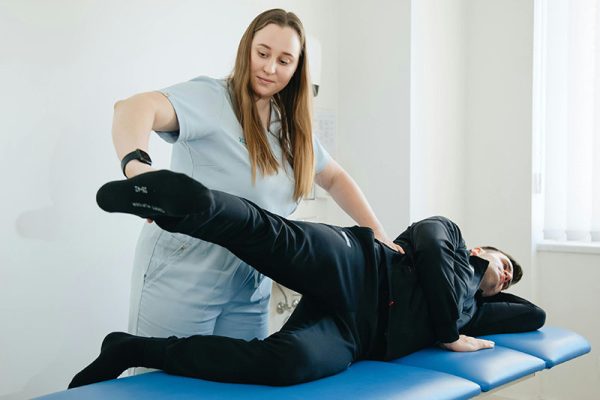
Hip Abduction
Isolated hip strengthening:
How to perform:
- Lie on side, bottom leg bent
- Keep top leg straight
- Lift top leg toward ceiling
- Hold 2 seconds at top
- Lower slowly with control
- Complete 12-15 reps per side, 2-3 sets
Benefits:
- Isolates gluteus medius
- Builds lateral hip strength
- Improves single-leg balance
- Reduces hip drop during walking
Standing Hip Flexion
Functional hip strengthening:
How to perform:
- Stand near wall for balance
- Keep standing leg slightly bent
- Lift opposite knee toward chest
- Hold 2-3 seconds at top
- Lower with control
- Complete 10-12 reps per leg, 2-3 sets
Benefits:
- Strengthens hip flexors
- Improves walking mechanics
- Enhances balance
- Functional for daily activities
“An exercise program that focuses on strength and mobility can help promote healthy everyday movement, which can reduce and prevent pain in your hips.” — Sarah Kellen, PT, DPT, Board-Certified Orthopedic Clinical Specialist, Hinge Health
Squats
Compound hip strengthening:
How to perform:
- Stand feet shoulder-width apart
- Keep chest up, core engaged
- Lower hips back and down
- Go to comfortable depth
- Press through heels to stand
- Complete 10-15 reps, 2-3 sets
Benefits:
- Strengthens entire lower body
- Improves functional movement
- Builds overall hip stability
- Enhances daily activity performance
Progressive Programs
Beginner Level
Week 1-2:
- Glute bridges: 2 sets of 10 reps
- Clamshells: 2 sets of 10 reps per side
- Hip abduction: 2 sets of 10 reps per side
- Frequency: 3 times per week
- Rest: 1-2 days between sessions
Intermediate Level
Week 3-6:
- Single-leg glute bridges: 3 sets of 10 reps per side
- Clamshells with band: 3 sets of 12 reps per side
- Lateral band walks: 3 sets of 10 steps each direction
- Standing hip flexion: 3 sets of 10 reps per leg
- Squats: 3 sets of 10 reps
- Frequency: 3-4 times per week
Advanced Level
Week 7+:
- All intermediate exercises with increased reps
- Add resistance with bands or weights
- Include single-leg balance challenges
- Incorporate dynamic movements
- Frequency: 4 times per week
Research from Arthritis Foundation shows consistent progression yields best results.
Exercise Guidelines
Proper Form
Critical form principles:
- Controlled movement – No jerking or momentum
- Full range – Move through complete motion
- Proper alignment – Keep joints stacked
- Core engagement – Maintain stability
- Breathing – Exhale on exertion
Safety Tips
Injury prevention:
- Start with bodyweight only
- Progress gradually over weeks
- Stop if sharp pain occurs
- Avoid exercises that worsen symptoms
- Warm up before strengthening
- Cool down with gentle stretching
Common Mistakes
Avoid these errors:
- Progressing too quickly
- Using momentum instead of muscle
- Skipping warm-up
- Ignoring pain signals
- Inconsistent practice
- Poor posture during exercises
Recovery Timeline
Expected Progress
Weeks 1-2:
- Improved muscle activation
- Better movement awareness
- Reduced initial soreness
Weeks 3-4:
- Noticeable strength gains
- Less hip discomfort
- Improved balance
Weeks 5-8:
- Significant strength improvement
- Better functional mobility
- Reduced pain during activities
Weeks 9-12:
- Maximum benefit achievement
- Enhanced stability
- Improved quality of life
Most people notice improvements within 2-3 weeks of consistent practice. Significant strength gains typically occur after 6-8 weeks.
Condition-Specific Approaches
Hip Arthritis
Modified strengthening:
- Emphasize range of motion first
- Avoid high-impact exercises
- Use supported positions
- Progress slowly and gently
- Focus on pain-free movement
Hip Bursitis
Gentle strengthening:
- Start with isometric holds
- Avoid positions causing pinching
- Build strength gradually
- Combine with stretching
- Ice after exercise if needed
Post-Surgery
Rehabilitation strengthening:
- Follow surgeon’s protocols
- Begin with gentle isometrics
- Progress under PT guidance
- Avoid restricted movements
- Build strength systematically
Studies from Harvard Health confirm that condition-specific modifications improve outcomes.
When Professional Help
Warning Signs
Seek medical evaluation for:
- Severe pain during exercises
- Increasing pain over time
- Hip giving out or buckling
- Swelling or warmth around hip
- Pain radiating down leg
- No improvement after 6-8 weeks
Physical Therapy
Benefits of PT guidance:
- Personalized exercise prescription
- Form correction and feedback
- Progressive program design
- Manual therapy techniques
- Education on self-management
Common Questions
How often should I do hip strengthening exercises?
Perform hip strengthening exercises 3-4 times per week with at least one rest day between sessions. Muscles need recovery time to build strength. Consistency matters more than frequency—regular practice yields better results than sporadic intensive sessions.
Can I do hip exercises every day?
Gentle stretching and mobility work can be done daily, but strengthening exercises require 24-48 hours of rest between sessions. Overtraining can lead to muscle fatigue and injury. Alternate strengthening days with rest or light activity days for optimal results.
How long before I see results?
Most people notice improved stability and reduced discomfort within 2-3 weeks of consistent practice. Significant strength gains typically occur after 6-8 weeks. Individual results vary based on starting fitness level, exercise consistency, and severity of hip problems.
Are these exercises safe for arthritis?
Yes, hip strengthening exercises are safe and beneficial for most people with hip arthritis. Start with lower repetitions (5-8 reps) and progress gradually. Avoid exercises causing sharp pain. Studies show strengthening reduces arthritis pain by supporting the joint. Consult your healthcare provider before starting.
What equipment do I need?
Most hip strengthening exercises require no equipment. A resistance band (cost: $10-20) enhances several exercises. An exercise mat provides comfort for floor exercises. As you progress, ankle weights (2-5 lbs) or light dumbbells can add resistance.
Can weak hips cause knee pain?
Yes, weak hip muscles—especially the gluteus medius—often cause knee pain. When hips are weak, the knee collapses inward during movement, creating abnormal stress on the joint. Strengthening hip abductors and external rotators improves knee alignment and reduces pain.
Key Takeaways
Effective hip strengthening requires:
✅ Consistent practice – 3-4 sessions weekly minimum
✅ Progressive difficulty – Gradually increase challenge over weeks
✅ Proper form – Quality over quantity for every repetition
✅ Adequate recovery – Rest days between strengthening sessions
✅ Patience – Allow 6-8 weeks for significant strength gains
✅ Comprehensive approach – Target all major hip muscle groups
✅ Pain monitoring – Stop exercises causing sharp discomfort
Remember: Hip strengthening exercises are most effective when performed consistently with proper technique. Most people experience significant improvement in stability, strength, and pain reduction within 6-8 weeks of implementing these expert-backed strategies from Hip Health Professionals.
Your journey to stronger, pain-free hips starts with that first exercise. Whether you’re managing arthritis, recovering from injury, or preventing future problems, these evidence-based techniques can transform your hip health and overall quality of life.
This guide provides general information about hip strengthening exercises. Always consult with a healthcare professional before starting any new exercise program, especially if you have existing medical conditions or severe pain.
This guide provides general information about nighttime hip pain relief. Always consult with a healthcare professional for proper diagnosis and treatment recommendations, especially if you experience severe or persistent symptoms.